
CERAMIC DEVELOPMENT & PRODUCTION COORDINATION
Ceramic Planter Manufacturing in China
Build a ceramic planter program around the shape, glaze and practical requirements of your retail, wholesale or plant-pairing application.
Discuss a Ceramic Planter ProgramShape, glaze and firing variation belong in the same development conversation.
IS THIS THE RIGHT PROGRAM?
For ceramic ranges where finish and fit matter together
For retail brands, importers and plant-program buyers developing ceramic planters in China. Review the ceramic body, fired dimensions and glaze as one specification, then confirm the sample range with the production partner.
Prepare for the first review
- Share the shape reference, required internal clearance and drainage or saucer arrangement.
- Approve a physical glaze reference and an acceptable appearance range rather than relying on a screen color.
- Confirm intended water use, protective packing and any testing requirements before the order.
CERAMIC BODY, SHAPE & SURFACE
Develop a ceramic product buyers can approve consistently
Dolomite, stoneware and terracotta are considered where appropriate for the intended planter. Shape development connects mold feasibility, opening size, wall profile and base stability. The body and firing process also influence how the finished color and dimensions should be specified.
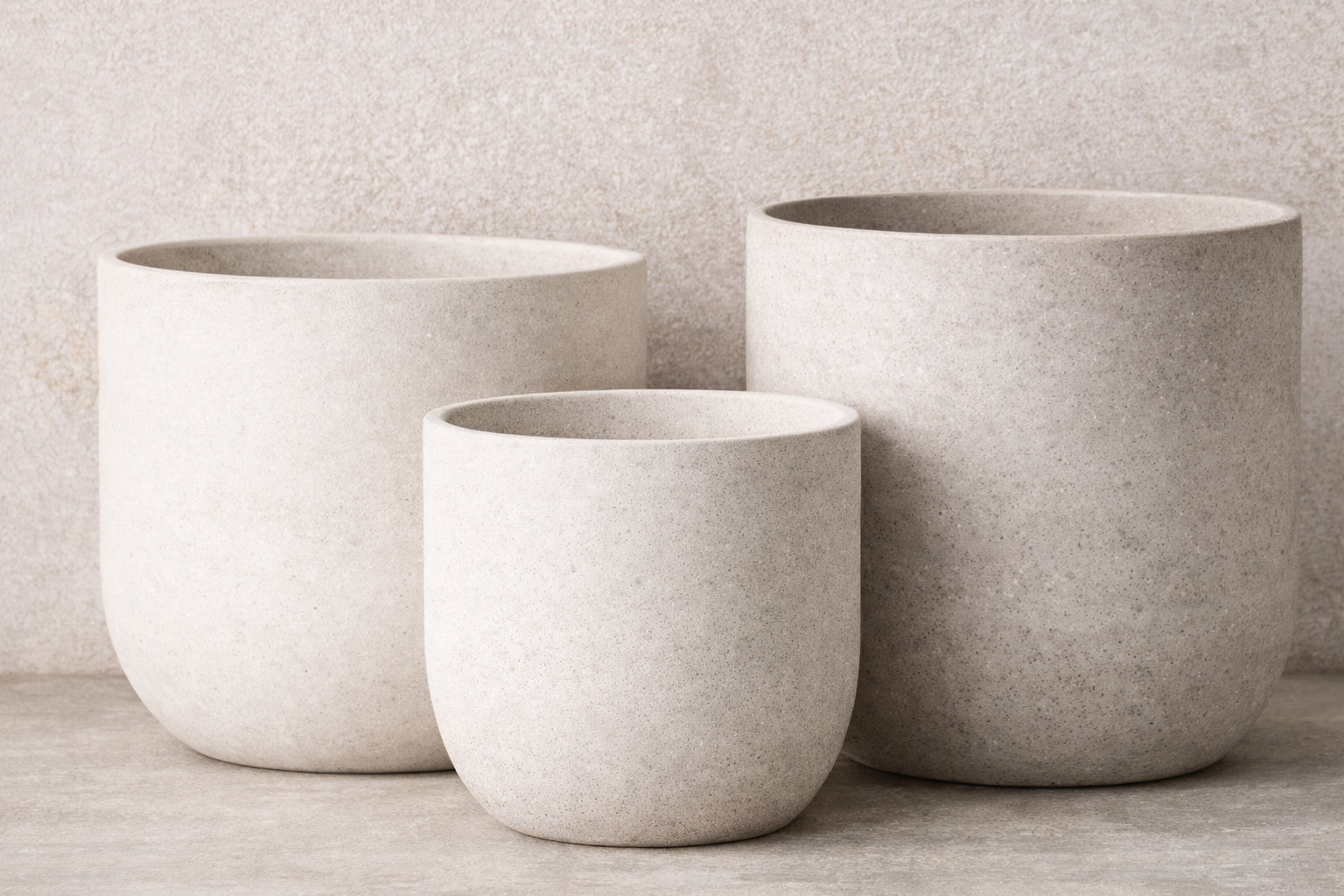
A quieter surface
Use an approved physical sample to define the desired low-sheen appearance. Review surface feel, color and practical care expectations for the intended application.
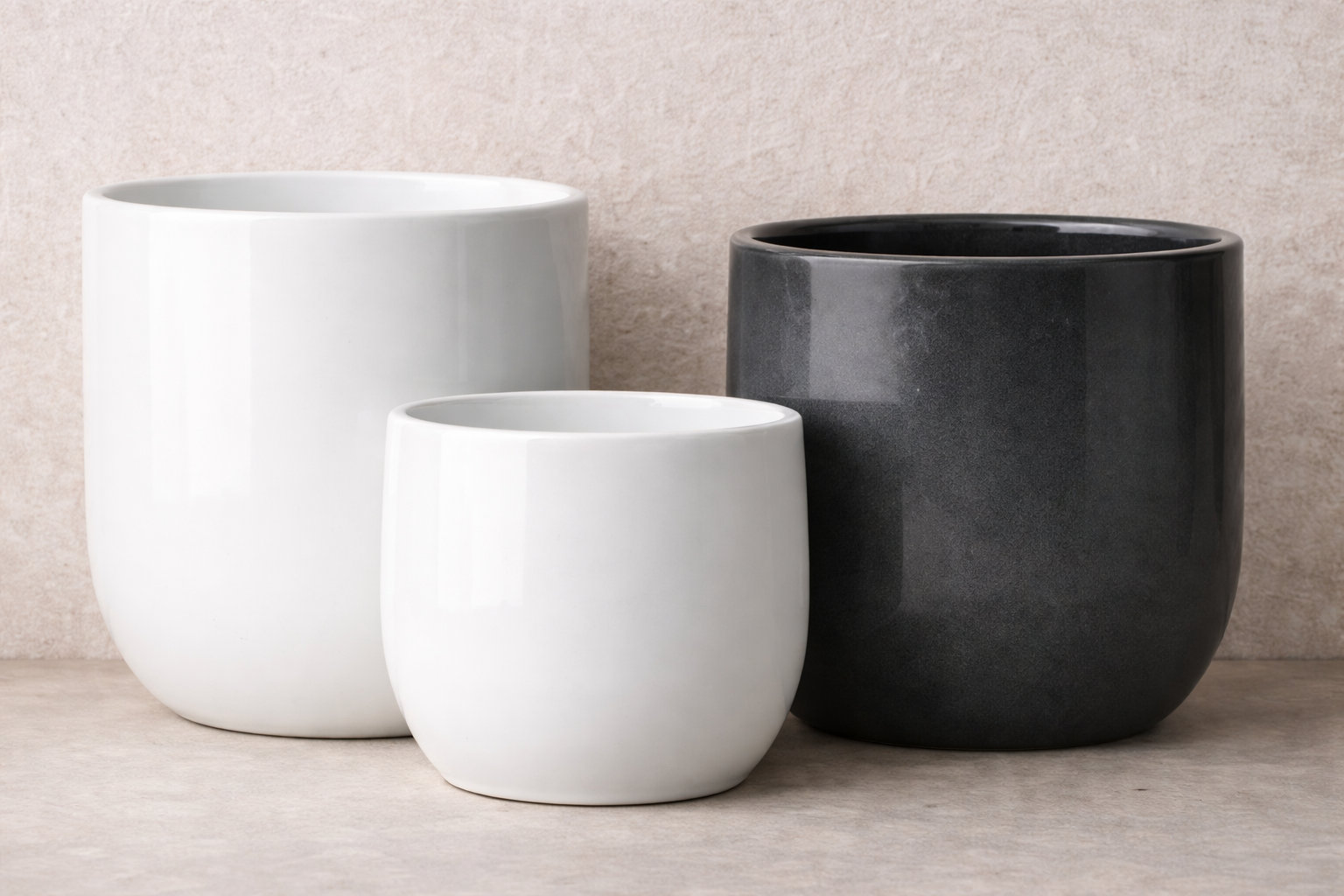
Color with reflected light
Review the glaze under agreed lighting and against the chosen ceramic body. Confirm the acceptable surface and color range before approving the production reference.
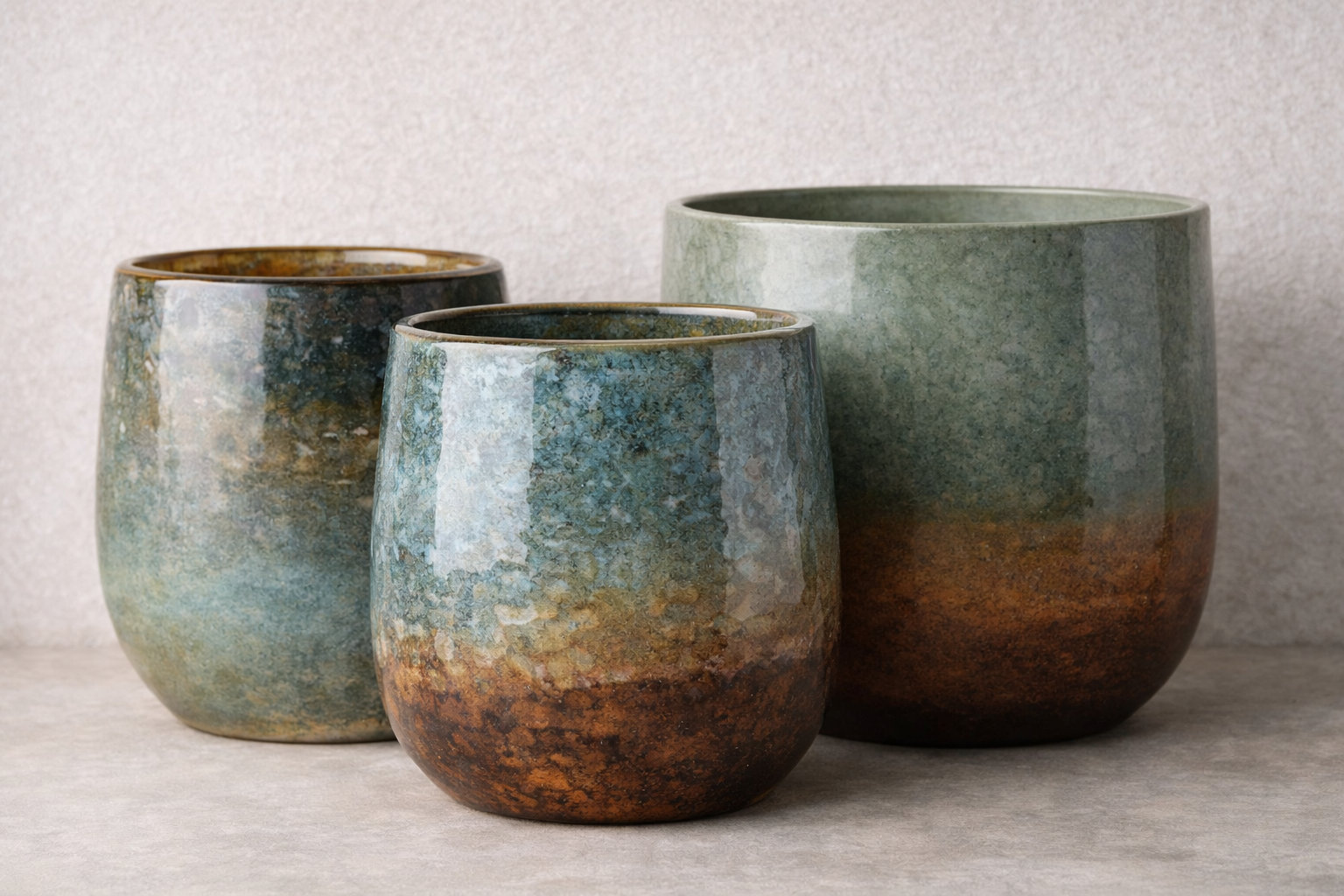
Variation as part of the finish
Agree a range of acceptable samples. Color movement and surface effects can differ across a piece and between firing runs; an identical finish on every unit should not be assumed.
Translate the design into sample decisions
A Pantone reference communicates color direction; a fired sample establishes the ceramic result for approval. Decal and cold-paint options can be reviewed with partners where supported.
- Confirm the body, shape, mold costs and tooling terms
- Review fired dimensions and acceptable tolerances
- Approve glaze or decoration references and permitted variation
- Check drainage-hole placement and matching saucer fit
Protect the product beyond the sample room
Carton dividers, individual protection, handling and pallet loading should be reviewed together. Trial packing and agreed transport testing help assess breakage risks. Container estimates need final packed dimensions, weight and stacking limits.
Need a ceramic cachepot to fit a nursery pot?Start with a product selection
Compare published dolomite and stoneware examples, design families and size references in our planter collections, then bring your selected references into the development brief.
Practical buyer guides
Tell us about your planter program
Describe the ceramic body, glaze reference, drainage or saucer requirements and sample needs.